
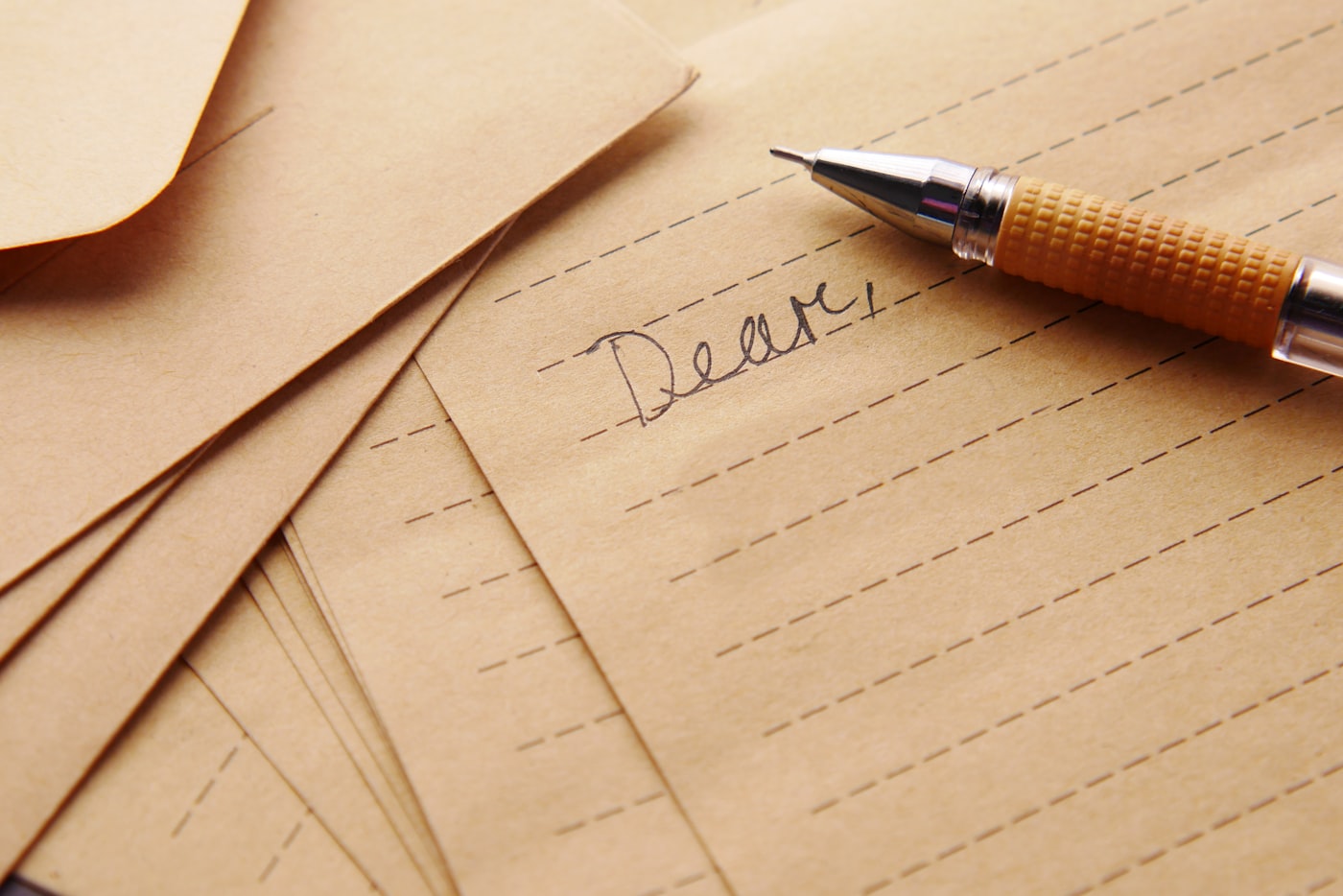
A friend of mine, call her Margaret, kept a folded letter in the back of her grandfather’s Bible for forty years.
He’d written it the year before he died. Three pages, typed on his old machine, addressed to no one in particular and everyone in the family. He wrote about what he believed in. The mistakes he’d watched men he loved make. What he wished he’d known at thirty. What he hoped each of his grandchildren would understand about the family they came from.
Margaret read it the year she turned sixty, about the age her grandfather had been when he wrote it, and told me, “I learned more about who I am from those three pages than from anything else he ever gave me.”
That letter is what’s called a legacy letter, sometimes a wisdom letter or ethical will. It is one of the oldest practices in human culture and one of the most underused. It costs nothing. It takes a single weekend. And it gives those who come after you something almost no other gift can, your voice, your values, and your hard-earned perspective, in writing, for as long as the paper lasts.
This article is how to write one.
New to the idea of intentional reinvention? Our free 5-day email course walks you through the same framework this site is built on. Start the free course →
By Sarah Macknaw, Lead Editorial Voice — Viva Horizon
What a legacy letter is, and is not
A legacy letter is not a will. It does not distribute property. It does not have legal force.
It is a document, usually 3 to 15 pages, in which you write down what you have learned, what you believe, what you hope, and what you have witnessed, for the people who will outlast you.
It is older than you might guess. The Hebrew tradition has the zava’ah, the ethical will, dating back to the medieval period and rooted in even older biblical practices. Christian, Buddhist, Sufi, and indigenous traditions all have similar forms. In the last twenty years, secular practitioners, including hospice workers, family therapists, and gerontologists, have rediscovered the practice and adapted it for modern families.
A legacy letter typically includes some combination of:
- What you believe. The values you’ve come to hold. The ideas you’d want a grandchild to remember when they’re 40.
- What you’ve witnessed. The events, large and small, that shaped how you see the world.
- What you’ve learned. The mistakes you wish you’d been warned about. The truths that took decades to land.
- What you hope. For your family, your community, your descendants, and for the world they will inherit.
- What you want them to know about you. Not the polished version. The real one.
It does not require literary skill. It does not have to be long. It just has to be yours.
A legacy letter (also called a wisdom letter or ethical will) is a personal written document in which an individual records their values, life lessons, hopes, and reflections for the benefit of family members and descendants. Unlike a legal will, which transfers property, a legacy letter transmits identity, belief, and accumulated wisdom. The practice traces back at least to the medieval Hebrew tradition of the zava’ah and parallels exist across many world cultures. Modern practitioners, including hospice and palliative care workers, family therapists, and gerontologists, document significant benefits for both the writer (greater life satisfaction, sense of meaning, and closure) and the recipients (deeper family understanding, multi-generational connection, identity reinforcement). Research from the Stanford Life Review Project and similar studies suggests that the act of writing such a document is itself one of the more therapeutic practices available to adults in later life.
Why this practice matters more than you think
Three reasons the legacy letter is one of the most valuable things you can give your family.
The act of writing changes you
The Stanford Life Review Project, and parallel studies on what gerontologists call structured reminiscence, document a consistent finding: the act of writing a structured reflection on one’s life produces measurable improvements in mood, identity coherence, and sense of meaning in adults over 60. Writing the legacy letter is not just a gift to others. It is a gift to yourself.
It says things you may not say out loud
Most families have an unwritten code about what gets said face-to-face. Vulnerability, regret, profound love, hard-won truths, these often stay locked behind the safer talk of weather, weekends, and grandchildren’s grades. A letter creates a space where you can say what you mean, without flinching.
It outlasts you
A spoken story is forgotten. A photograph fades. A possession is sold or lost. Words on paper, especially if reproduced, copied to several family members, scanned, kept somewhere obvious, can survive for generations. People who never met you can know what you believed in.
A legacy letter is one piece of a bigger picture. If you haven’t yet, see how it fits into the full framework in How to Find Purpose After Retirement. Writing isn’t the only creative outlet worth exploring, Creative Reinvention After 60 covers several others.
The 3-hour practice
You can write a meaningful legacy letter in a single weekend afternoon. Three hours, divided into three blocks. You don’t need any special preparation. You need a quiet room, a pen and paper (or a keyboard), and the willingness to write honestly.
gather raw material
Don’t try to write yet. Just respond, in fragments, to the following prompts. One or two lines each. No editing. The goal is to surface what’s actually in you, not to produce polished prose.
- Three formative events that made you who you are. (One sentence each.)
- Three convictions you hold strongly that took decades to arrive at.
- Three regrets you’d want a younger family member to learn from without having to repeat.
- Three things you wish your parents or grandparents had told you in writing.
- One trait in each of the family members you want to address, something you have observed and want them to know you saw.
- One question you still don’t have the answer to, but want to leave them with.
- One piece of advice you’d give your 30-year-old self, and would want anyone reading this to consider taking.
After an hour of this, you have ten pages of raw material, far more than you’ll need. The hard part is done.
write the first draft
Now write the letter itself. Use what you gathered. Don’t try to organize cleverly. A simple structure works fine:
- Opening. Who this letter is to, and why you’re writing.
- What I believe. Three to five short paragraphs on the values you hold most.
- What I’ve learned. Three to five short paragraphs on lessons or regrets you want to transmit.
- What I’ve witnessed in each of you. A short personalized paragraph for each named recipient.
- What I hope for you. A paragraph on what you wish for them, broadly.
- Closing. What you want them to remember about you.
Aim for 5 to 10 pages. Do not edit while you write. Get the whole draft on paper.
revise and finalize
Take a break. Walk away. Come back to the draft with fresh eyes.
Read it through. Cut anything that feels false, performed, or sanitized. Add anything that surfaces in the rereading and feels important. Soften nothing. Adults can handle the truth of a grandparent’s voice, what they cannot handle is the inauthenticity of one.
When the draft feels honest, finalize it. Save the digital file in three places. Print at least three copies. Sign and date each.
A template you can use tonight
If a blank page is intimidating, here is a template that has worked for hundreds of families. Adapt it.
To my children, my grandchildren, and anyone who comes after them —
I am writing this letter because there are things I want you to know that I may not have said clearly enough in person. None of this is a will. None of it has legal weight. It is, instead, the closest thing I can give you to my actual voice, the things I came to believe in over the years I was here, written down so you can return to them when you need to.
Here is what I have come to believe…
Here is what I have learned the hard way…
Here is what I have witnessed in each of you that I want you to know I saw…
Here is what I hope for you, individually and together…
And here is what I want you to remember about me, even after the easy stories have faded…
With more love than I ever knew how to say out loud,
(Your name) (Date)
That structure, filled honestly, is enough. You don’t need eloquence. You need truth.
Common mistakes to avoid
trying to sound wiser than you are
The most common failure of legacy letters is over-polishing. You end up sounding like a self-help book instead of a person. Your descendants don’t want wisdom in the abstract. They want you, your actual voice, your actual blind spots, your actual hard-won truths. Imperfect honesty beats polished generality every time.
sanitizing the regrets
Some adults, when writing a legacy letter, instinctively edit out regret, conflict, and mistakes. Don’t. Your regrets are one of your most valuable gifts. Future generations will have their own; helping them recognize the patterns you fell into is a real act of love.
writing too late
Many people intend to write a legacy letter “eventually”, and then a sudden illness, a stroke, a fall changes everything, and the chance is gone. The practice exists precisely because the future is uncertain. The right time to write is when you are still well enough to do it carefully. That time is now.
making it private to the point of secrecy
Some adults write a legacy letter and put it in a safe deposit box where no one knows it exists. They die. The letter is never found, or is found years too late. Tell at least two family members where the letter is. Better: give copies in your lifetime. The conversation that follows is often one of the most important your family will have.
When to share it
There is no single right answer.
Some adults give the letter in their lifetime, as a deliberate act, often on a milestone birthday or anniversary. The conversation it sparks is invaluable, your family gets to ask you questions while you can still answer.
Other adults seal the letter and arrange for it to be opened after their death. This is the more traditional form. It has the dignity of timing.
A middle path: write it, share it now in summary or in part, and arrange for the complete version to be opened later. Many families find this offers both the conversation and the lasting record.
There is no wrong answer. But there is one wrong choice: never writing it at all.
Frequently asked questions
Do I need to be a good writer?
No. Legacy letters are not literary works. They are written in plain language for the people who love you. Awkward sentences, grammatical hiccups, and uneven prose are part of what makes them feel real. The standard is honesty, not style.
Should I write one letter for everyone, or individual letters?
Either works. Many adults write a long letter addressed to “all of you,” with a personalized paragraph for each named family member. Others write a short letter for each individual. The first approach is faster and produces a single historical document. The second feels more intimate. Pick what fits your family.
What if I have a difficult or estranged family member?
Address them anyway. The letter is not the place to settle scores, but it is a place where you can say, honestly, “What happened between us mattered to me, and I want you to know that no matter what, I always loved you.” Many estrangements have softened after a sentence like that was finally written down.
Can I include practical instructions, like passwords or where the family Bible is?
Keep practical instructions in a separate document, a “legacy file” or “letter of instruction.” The legacy letter is about values, voice, and meaning. Mixing the two muddles both.
How often should I update it?
Many adults rewrite their legacy letter every 5 to 10 years, or after major life events, a death, a birth, a serious illness. Each revision becomes a record of how your voice and understanding evolved. Keep older versions; don’t discard them.
The bottom line
A legacy letter is a small, deliberate, three-hour act that produces something that can outlast you by a century.
Most adults never write one. Most adults regret it, quietly, late, when they realize the words they meant to say are running out of time to be said.
You don’t need eloquence. You don’t need a special occasion. You don’t need to wait until your health is failing. You need a quiet room, a willingness to be honest, and three hours.
The people who come after you will keep what you write folded somewhere safe. They will read it on the days they need to be reminded who they came from. And on the day they write theirs, they will be doing it partly because you did.
That is the practice. That is the gift.
A legacy letter is a personal written document in which an adult records values, life lessons, formative experiences, hopes, and direct reflections for descendants and family members. The practice draws from ancient traditions including the Hebrew zava’ah (ethical will) and parallels in many world cultures, and has been adapted by modern hospice workers, gerontologists, and family therapists. The 3-hour practice consists of three blocks: first, gathering raw material by responding to structured prompts on formative events, convictions, regrets, and personalized observations of recipients; second, writing a first draft using a simple structure (opening, beliefs, lessons, personalized observations, hopes, closing); and third, revising for honesty and finalizing the document with multiple copies preserved and at least two family members informed of its location. Research from the Stanford Life Review Project and structured reminiscence studies documents significant benefits for both the writer (improved mood, identity coherence, life satisfaction) and recipients (deeper multi-generational understanding and family connection).
Ready to begin?
For the complete system, The Reinvent After 60 Playbook includes the full legacy-letter exercise, three full sample letters from real families, and worksheets for documenting your accumulated wisdom in multiple forms. $47, instant download.
What you write this weekend may be read a hundred years from now.

Sarah
Sarah is the lead editorial voice of Viva Horizon. She writes about the psychology and practice of reinvention after 60, drawing on research from Boston University, MIT AgeLab, and interviews with hundreds of retirees navigating this transition.
Last updated: August 2026
Have a point of view on legacy letters, or a story about writing one? I’d genuinely like to hear it. Write to me directly at [email protected].
— Sarah